
Native Americans
Articles

Indian Removal Act
The Indian Removal Act of 1830 was signed into law on May 28, 1830, by United States president Andrew Jackson. The law, as described by Congress, provided "for an exchange of lands with the Indians residing in any of the states or territories, and for their removal west of the river Mississippi".

Indian reservation
An Indian reservation in the United States is an area of land held and governed by a Native American tribal nation officially recognized by the U.S. federal government. The reservation's government is autonomous but subject to regulations passed by the United States Congress, and is administered by the United States Bureau of Indian Affairs.

Kiowa
Kiowa ( KY-ə-wə, -wah) or Ǥáuigú (Kiowa pronunciation: [kɔ́jɡʷú]) people are a Native American tribe and an Indigenous people of the Great Plains of the United States. They migrated southward from western Montana into the Rocky Mountains in Colorado in the 17th and 18th centuries and eventually into the Southern Plains by the early 19th century.

Muscogee
The Muscogee (English: məss-KOH-ghee), Mvskoke or Mvskokvlke (Mvskokvlke, pronounced [mə̀skóːɡə̂lɡì] in the Muscogee language), also known as Muscogee Creek or just Creek, are a group of related Indigenous peoples of the Southeastern Woodlands in the United States.

Native Americans in the United States
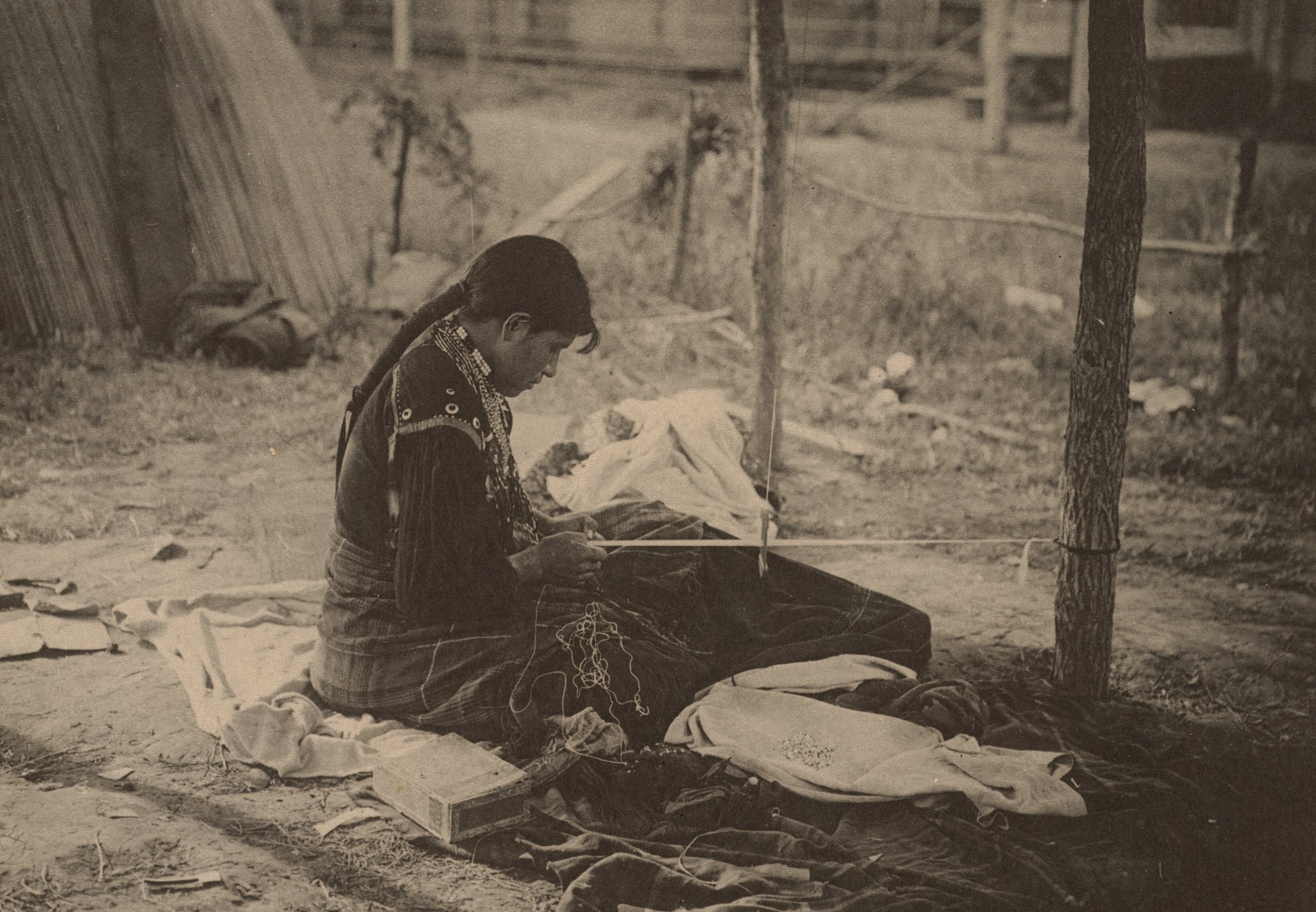
Native Americans (also called Indians, American Indians, First Americans, and Indigenous Americans) are the Indigenous peoples of the United States, particularly of the lower 48 states and Alaska. They may also include any Americans whose origins lie in any of the Indigenous peoples of North or South America.

Navajo
The Navajo are an Indigenous People of the Southwestern United States. The Navajo term for themselves is Diné. Their language is Navajo (Navajo: Diné bizaad), a Southern Athabaskan language. The states with the largest Diné populations are Arizona (140,263) and New Mexico (108,305).

Nez Perce
The Nez Perce (/nɛz pɜːrs/ NEZ-purse); autonym in Nez Perce: nimíipuu, meaning 'we, the people') are an Indigenous people of the Plateau who still live on a fraction of the lands on the southeastern Columbia River Plateau in the Pacific Northwest. This region has been occupied for at least 11,500 years.

Osage Nation
The Osage Nation ( OH-sayj) (Osage: 𐓏𐓘𐓻𐓘𐓻𐓟 𐓁𐓣𐓤𐓘𐓯𐓣, lit. 'People of the Middle Waters') is a federally recognized Native American tribe in Oklahoma. They are an Indigenous people of the Great Plains historically from the Midwestern United States.

Pawnee people
The Pawnee, also known by their endonym Chatiks si chatiks (which translates to "Men of Men"), are an Indigenous people of the Great Plains that historically lived in Nebraska and northern Kansas but today are based in Oklahoma. They are the federally recognized Pawnee Nation of Oklahoma, who are headquartered in Pawnee, Oklahoma.
Plains Indians
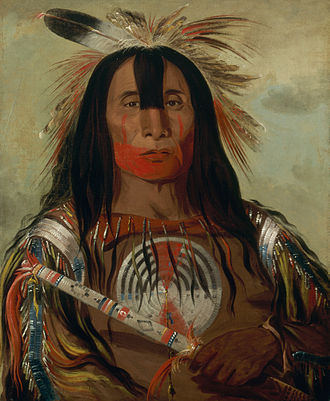
Plains Indians or Indigenous peoples of the Great Plains are the Native American tribes and First Nations peoples who have historically lived on the Interior Plains (the Great Plains) of North America.

Seminole
The Seminole are a Native American people who developed in Florida in the 18th century. Today, they live in Oklahoma and Florida, and comprise three federally recognized tribes: the Seminole Nation of Oklahoma, the Seminole Tribe of Florida, and the Miccosukee Tribe of Indians of Florida, as well as independent groups.

Shawnee
The Shawnee ( shaw-NEE) are a Native American people of the Northeastern Woodlands. Their language, Shawnee, is an Algonquian language. The Shawnee precontact homeland was likely centered in southern Ohio. In the 17th century, they dispersed throughout Ohio, Illinois, Maryland, Delaware, and Pennsylvania.